Tuesday, January 21, 2014

Bring History Alive with Fun Learning Games for Kids – Top History Games for Your Child


Americans around the country are pretty bad at history. Not advanced history topics likehow the Aztec civilization came to an end, but basic American history like who it got independence from, and why Abraham Lincoln is important. Labelled boring and irrelevant, history is often the least popular subject in school. But history is not to be blamed. History is full of life, replete with fascinating stories of courage, cunning, endurance, treachery, bravery, magnanimity, jealousy and so much more. It is about people just like us who were born into a different time and place and who shaped the world as we know it today. It isn’t history itself, but how history is taught that is the problem.

History is about people like us who were born into a different time and place.


 Very often in schools, history is presented as a large collection of names, places and dates with no relevance to students’ lives. Failing to see how the information is important to them, students give it only as much attention as is required to pass the exam, and forget everything once this is accomplished. Fortunately, the solution is not far off. By bringing history to life, by transporting students to the settings in which historical events occurred, teachers can make history the most interesting subject of all. This may not sound very easy, but it is. Fun learning games for kids that revolve around historical themes do precisely that, with no further effort required on the part of the teacher.

The internet has manykids’ learning games that are perfect for teaching history. These games take children back in time to historical events like World War II, or periods like the pre-Civil War period, and let players experience first-hand the lifestyle and events of that time. Here are some of the most popular learning games focusing on historical events in the United States as well as other parts of the world.

The Oregon Trail – This classic game is one of the most well-known and popular learning games for kids across all subjects. Designed by a student teacher to teach a grade 8 history class, the game is set in the 19th century when emigrants used the Oregon trail to migrate east. The player assumes the role of a leader among a group of settlers migrating to Oregon. Kids are introduced to the difficulties the migrating families had to face, and the decisions they had to make along the way, gaining an insight into what it meant to cross the Oregon Trail in the 1800s.Modern versions of the game are now available for Wii and 3DS, and have improved graphics and gameplay. 
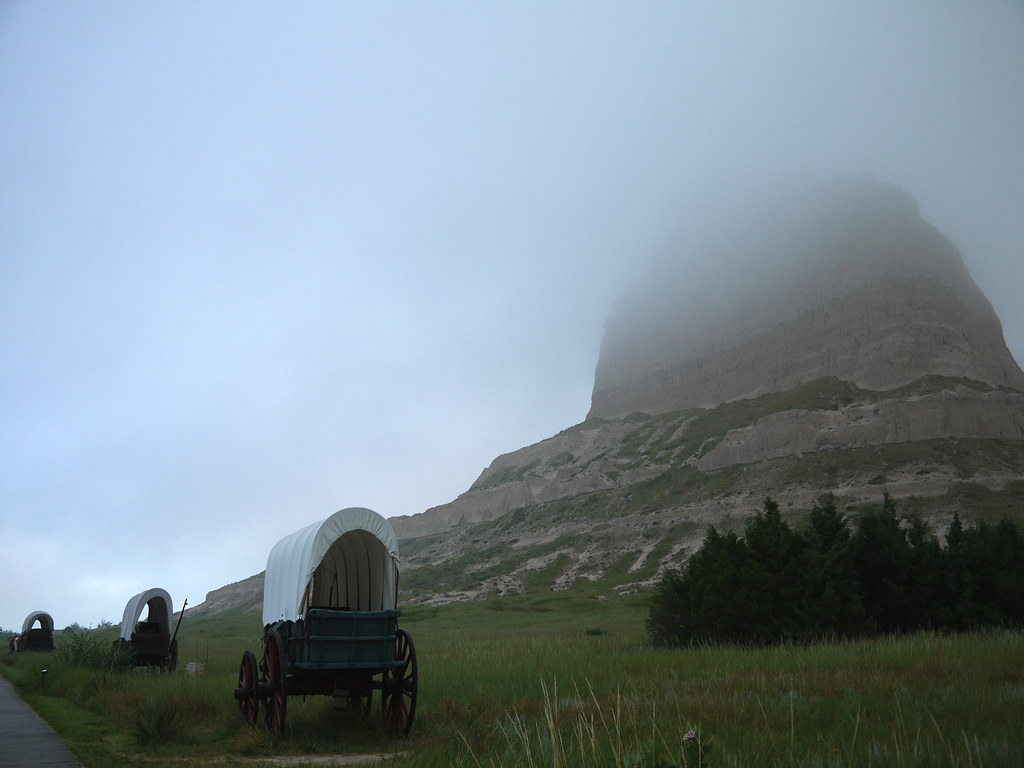

Photo by david_jones

Mission US: Flight to Freedom–This learning game for kids gives them an understanding of what it was like to be an African American in the pre-Civil War period. Players take on the role of Lucy, an African American teenager working as a slave on a plantation. When things go wrong, she is forced to flee for her freedom, leaving behind her family and heading out into the unknown. The decisions that players make shape the course of the game, define Lucy’s personality and ultimately decide how the story will end. 

On the Trail of Captain John Smith–John Smith was an English explorer who joined an expedition to what is now the United States of America in the year 1606. He played an important role in the establishment of the Virginia Colony, England’s first permanent settlement in the New World. However, he had to face many hardships along the way. ‘On the Trail of Captain John Smith’ is an interactive learning game for kids that follows the course of events faced by John Smith during his first years in America.

Roman Town – This engaging learning game is perfect for teaching students about world history. Kids assume the role of an archaeologist and learn about life in Rome in 79 A.D. through their archaeological discoveries. The game lets students understand how archaeologists work, while giving them an understanding of the daily life, technological advancements and art forms of ancient Rome.

With engaging learning games like these to bring history alive, children will find a lot more sense in those names, dates and places they are expected to remember in history classes.

Monday, December 16, 2013

Traditional Outdoor Games for Kids – How to Have Fun in the Sun


As a parent, you may have long suspected what recent studies have confirmed – kids aren’t playing outside as much as they used to when you were a kid. While this in itself isn’t very alarming, the same cannot be said of the extent to which it is true! According to researchers, kids on an average play outside for only half the amount of time their counterparts of a few decades ago did. In fact, a study revealed that children would rather spend time on an electronic device, do household chores or complete homework than play outdoor games for kids! Further, one in three children do not know how to play a game of hopscotch!


Photo by Dean McCoy Photography
Perhaps it is too late to change the way kids in society spend their free time, but you can still do your bit to helping your child play more outdoor games for kids. Remember the simple yet delightful outdoor games you used to play in your childhood? Teach them to your kids and play along with them to encourage them to spend more time outside. Here’s a quick refresher in case your memory’s getting slightly rusty.

Traditional Outdoor Games for Kids
      1.  Hide-and-Seek: It’s highly unlikely that you don’t remember how to play this game, but it’s worth mentioning in the list of must-try kids’ games. One person is “it”, and counts to a pre-decided number with eyes covered while all the other players rush to find a good hiding spot for themselves where they won’t be discovered. Once the time is up, the player who is “it” attempts to find all the others. There are many variations to this popular kids’ game. Of course this is often played indoors as well, but playing it outdoors is more challenging, fun, and offers a lot more running space.
 
      2.  Hopscotch: This one’s dedicated to those children who have never experienced the joy of playing this fun sidewalk game. Kids use a sidewalk chalk to draw a hopscotch grid, numbered from 1 to 9 (or 10, depending on the grid pattern). There are many ways to draw the grid, all of them including a combination of single and double squares one above the other. Players find a medium sized stone to use in the game and then take turns to do the following: throw the stone on ‘1’, hop over the stone and then on each subsequent number to the end of the grid using one or two legs (depending on the layout of the grid), turn around and hop back to the beginning, stopping at ‘2’ to bend and pick up the stone before hopping to the beginning. The player continues by throwing the stone on ‘2’ in the next round, and so on. The player’s turn ends when any of the steps are done incorrectly. 

      3.   Shadow Tag: Most people know how to play the kids’ game tag. This one is a fun variation perfect for a sunny day. One player is designated “it” and attempts to chase and tag the shadow of the other players with his/her foot. The first player to be tagged is the new “it” and the game continues until the kids are too tired to continue running around.

     4.    Capture the Flag: Players are split into two teams and each team has a flag or marker at their base. The object of this outdoor game for kids is to try and capture the other team’s flag and bring it back to the home team without getting caught. Players standing in “enemy” territory can be “jailed” if they are tagged by a member of the other team. “Jailed” players can be released if a teammate manages to run to the other side, tag the “jailed” player and return to the home team without getting caught. 

With these fun outdoor games for kids, parents can encourage their children to spend more time outdoors and perhaps even convince interested onlookers to join in the fun!

Friday, November 22, 2013

What to Expect from Online Kindergarten Worksheets


Once the fun and games of preschool are over, it is time to take up school more seriously. While preschool readies them for what is to come in the higher grades, kindergarten can actually be likened to the proverbial (and crucial) first rung of the ladder. If your kids have moved on to kindergarten, chances are you have already familiarized yourself with a few learning resources other than the state prescribed textbooks. The most common among all the resources available to teachers and home-schooling parents are online worksheets. If you are a first timer and have no experience with kids and schooling, it is not uncommon to find yourself debating whether to use the freely available worksheets or not. Questions like, “Are kindergarten worksheets for us?” or “Should I trust the readily available online kindergarten worksheets?” can be heard resounding in the living rooms of many houses with young kids. The easiest way to answer those questions is to know what one can expect from such resources.

So what can one expect from these free, printable kindergarten worksheets available all over the internet? We help you find out!

Practice, Practice, Practice
We have all heard the saying, “Practice makes perfect” and there isn’t an iota of untruth to it. The more we practice, the better we get at anything. When it comes to learning anything, this fact cannot be stressed more. Kindergarten worksheets are the perfect practice material. They are free and easily available and most of these online worksheets are easy-to-download PDFs. All you need to do is print out a handful of them and get the little ones started. 


Micro Approach to Learning – Scoring Over Regular Textbooks
Online kindergarten worksheets score over regular textbooks as the exercises available in textbooks are limited, but when it comes to online worksheets, the sky is the limit. The huge number of material available on each topic allows kids to adopt a micro approach to learning, perfecting each step before moving on to the next. This ensures there are no grey areas left. For example, kindergarteners are taught single-digit addition in school. Whether or not your kids have mastered counting, the pace at which the curriculum is being taught in school will not be altered. Hence, teachers will move on to addition even before each student has had the chance to master the previous step. This can be a problem as kids are often forced to move ahead without being absolutely clear with the previous concept. This is when you should definitely opt to introduce kindergarten worksheets. With continued practice at home, kids will be able to master counting before moving on to addition and other skills being taught in school.

Time for Fun – No Compromises There
Sure, kindergarten might be more serious than preschool but it is nowhere as strict as first grade is. If you have heard rumors like kindergarten is nothing like the good old days, don’t let that bother you. Just run a google search for kindergarten worksheets and you will know. For this grade, the online resources are full of fun things to do, pretty pictures to look at and ‘fun while you learn’ kind of activities that will put the zing in studies and make your kindergarteners reach out for them.

Now that you know what to expect from kindergarten worksheets, will you opt for them? The answer is pretty obvious – they are your go-to resources if you want to make learning easy and fun for the little ones. Good luck!

Friday, October 18, 2013

How to Win the Spelling – Fun English Games Show the Way


Spelling competitions are an annual feature in most schools around the country. Many students dread these events and are glad to be eliminated in the early rounds, but some enthusiastic spellers study dedicatedly for months, hoping to participate in the National Spelling Bee. Many kids who enjoy spelling and English games have been stung by the Spelling Bee at least once, but make no mistake; the National Spelling Bee is as rigorous a test of your intellectual measure as any math or science Olympiad. So here are 3 useful tips to get you started on the path to spelling glory.

5 Tips to Win the Spelling Bee

1.    Read, read, read

That’s what a toddler building his basic vocabulary does and that’s what an aspiring Spelling Bee winner needs to do. Try and read as much and as many genres as you can – poetry, fiction, biographies, news – and anything else you can think of. A voracious reader encounters strange words in unexpected places and if you make the effort to master new spellings you stand a better-than-average chance of winning the spellathon. Reading a dictionary might be a tad boring compared to reading fiction, but it’s a good way to memorize unfamiliar words. The organizers of the National Spelling Bee usually announce which dictionary will be used because dictionaries sometimes spell certain words differently.

2.    Play English games

English games that teach kids to spell have three important benefits:
  • They are interesting enough to hold players’ interests and motivate them.
  • They enable players to compete on equal footing with other players of varying spelling skills.
  • They expose players to a wider variety of words and spellings than they would otherwise encounter.

English games such as word sorting help kids to develop their proofreading skills and train them to notice the important features of the words they need to study in order to win spelling championships. Word hunting is another useful English game that encourages players to actively engage in searching for new words that they need to learn.

3.    Deduce the spelling

The official Spelling Bee rules allow contestants to ask a certain number of questions before attempting to spell it. If you are unfamiliar with the word, you are allowed to ask what part of speech it is, its language of origin, how it is used in a sentence and its pronunciation. Knowing the etymology (or origins) of a word and the language it comes from can make all the difference between winning and losing.When the pronouncer pronounces a word, you may not get all the clues you need to spell it, but if you are aware of spelling patterns of all the major languages, you stand a good chance of cracking the Bee. You might also want to play English games to build your repertoire of root words.

As with most ambitious goals, winning the National Spelling Bee is all about building upon your existing knowledge of words and taking small steps to enhance it.

Thursday, September 26, 2013

Help Kids Learn with Reading Games

Reading Games Enhance Memory and Reading Skills

‘Reading’ is a versatile word – not because of its many erudite applications but because of its multiple cognitive and therapeutic benefits. Introduction to alphabets is the preliminary stage of learning which eventually helps kids to read independently. The online space is filled with a myriad of reading games that help kids to better their reading skills, besides enhancing their memory. Reading is often defined as ‘an action or skill of reading written or printed matter silently or aloud’. To help kids read ‘printed matter silently or aloud’ without adults’ assistance, online reading games are slowly making their way into the classroom. 


How Can Reading Games Enhance Memory? 


A Johns Hopkins study found that parents who taught kids for a continuous period of six months developed sharper cognitive skills – a theory that also applies to kids who are new to reading. Kids who play reading games online show promising signs of better grades at the end of their sessions. Reading requires detailed study of letters and alphabets which get captured in the brain as images. The habit of reading is often related to English as a subject but it gets extended to the learning graph of other subjects as well – reading is not only an English activity, it’s an activity that helps kids to learn other subjects too, while enhancing their memory. ‘Reading to learn’ and ‘learning to retain’ are two poles of our cognitive processes that help strengthen human memory. The effort kids put in to read repeatedly so that they can retain important points has a positive effect on the brain. Online reading games are formulated in such a way that they require kids to read, retain and recollect. 

How are Reading Skills Enhanced with Reading Games? 


JumpStart.com, PBS Kids.org, Coolmath-games.com, Educationworld.com offer a wide range of reading games for kids that help them learn while playing. 

Story Land is a preschool game offered by JumpStart that encourages preschool kids to learn and explore while having fun! Story Land is a fantastic reading game that introduces kids to reading. Kids have to read the instructions in order to complete tasks without them even realizing that they are learning while playing! 

Letter Sounds Match-Up is a reading game hosted by PBS Kids that introduces kids to the sounds of words and helps them identify alphabets. It’s a flash card game where preschool kids have to identify a visual pictorial card that starts with a letter on the other cards. While helping kids to read, it also enhances their memory and retention power. 

Coolmath-Games hosts a wonderful reading game for kids called The Alphabetizer. Preschool kids have to read the alphabets that appear on screen and place them into round slots, arranging them in alphabetical order. A wrong arrangement prompts an action that places the alphabets in the right order helping kids to learn and read the letters in the suggested order.